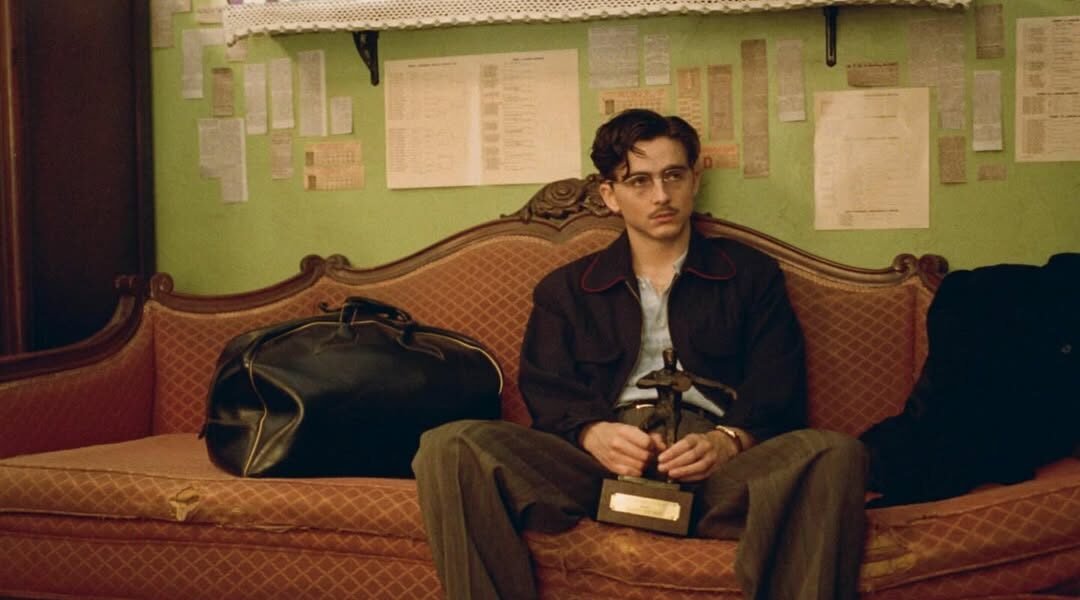
In late February 2026, during a live conversation with Matthew McConaughey produced by CNN and Variety, Timothée Chalamet said something that most people in a bar would have nodded along to and quickly forgotten. He did not want to end up working in “ballet or opera, or things where it’s like, ‘Hey, keep this thing alive, even though like no one cares about this anymore.'”
The remark got a laugh from the audience. It was meant to be a throwaway contrast to his argument for keeping movie theaters alive. Within 48 hours, it had turned into one of the strangest cultural flashpoints of awards season, earning its own informal name online: Chalamet Gate.
The Metropolitan Opera posted a pointed response on Instagram tagging him directly. The Royal Ballet and Opera in London released a statement defending the art form’s cultural reach. Megan Fairchild, a principal dancer at the New York City Ballet, recorded a video calling out his implication that ballet and opera are simply careers less popular people default to. The Seattle Opera offered 14% off tickets with a promo code that spelled out his name. Opera houses from Paris to La Scala to Vienna joined in, each with their own version of the same message: people do care, and here is proof.
What started as a throwaway joke at a promotional event ended up pulling on a thread that neither side fully expected to find there.
What Chalamet Actually Said, and Why It Stung
Context matters here. Chalamet was not delivering a lecture on the state of the performing arts. He was making a comparison in the middle of a conversation about whether films should front-load action sequences to retain short-attention-span audiences. He explicitly added “all respect to all the ballet and opera people out there.” The full quote reads as a rhetorical flourish, not a considered critique.
But the performing arts community heard something specific in his phrasing, and they were not wrong to hear it. The phrase “even though no one cares” carries a particular kind of dismissal. It does not say opera is bad. It does not say ballet is unimportant. It says those things are maintained by institutional obligation rather than genuine public appetite. That is a meaningful claim, and it is one that practitioners of those art forms hear fairly regularly, which is probably why the response came so quickly and from so many directions at once.
Irish opera singer Seán Tester addressed it directly, writing that calling these art forms irrelevant says less about the art itself than about how little time someone has spent genuinely experiencing it. London-based dancer Anna Yliaho put it more pointedly: only an insecure artist tears down another discipline to elevate their own.
The Royal Ballet and Opera issued a formal statement noting that ballet and opera have never existed in isolation. They have, the statement argued, continuously informed and elevated theatre, film, contemporary music, fashion, and other art forms across centuries. The institution’s Instagram post was quieter in tone: thousands of people gather every night at the Royal Opera House, and their doors are open for Chalamet to reconsider.
Ballet dancer Victor Caixeta raised the most uncomfortable question of all: whether Chalamet’s films would still be watched in three hundred years, the way these art forms still are.
The Part Everyone Skipped Over: Is He Entirely Wrong?
There is an uncomfortable honesty lurking inside the backlash that most institutions were too defensive to engage with directly.
One voice that did engage with it was Ben Glassberg, a conductor with the Orchestre de l’Opéra Normandie Rouen, who made a video explicitly disagreeing with the defensive response being mounted by opera houses. His position was direct: Chalamet was not entirely right, but he was not entirely wrong either. Many people genuinely are not interested in opera. Treating it as a superior art form and expecting the public to come around is, in Glassberg’s view, a mistake.
Attendance data tells a complicated story. Metropolitan Opera attendance has struggled post-pandemic, and a 2024 report from OperaWire noted that contemporary operas at the Met were drawing only around 65 percent of audience capacity compared to traditional repertoire. Opera America’s own 2024 field report, drawn from 36 opera companies across the country surveying over 11,000 attendees between 2020 and 2024, found that while post-pandemic first-time attendance hit record levels, converting those newcomers into returning audiences remained the central unsolved challenge for the sector.
The National Endowment for the Arts has long tracked these numbers. Even at the national level, ballet attendance in the United States hovers around 7 to 8 percent of adults in any given year, and opera sits lower still. In France, a 2021 high school reform limited student access to music as an optional subject, and several French opera houses have faced subsidy reductions from both national and local authorities in recent years.
The problem Chalamet pointed at, however clumsily, is real. These art forms are expensive to produce, heavily dependent on government subsidy and private patronage, and reach a narrow demographic compared to most other forms of public entertainment. That is not a reason to dismiss them. It is a reason to ask why.
The Actual Barrier Is Not the Ticket Price
Here is where the conversation gets genuinely interesting, and where most people who weigh in on it get it wrong.
The instinct, when discussing accessibility in opera and ballet, is to focus on ticket prices. And prices are real: premium seats at the Metropolitan Opera can run to several hundred dollars, and the Royal Opera House in London is not cheap. But a 2025 study from the University of California San Diego Rady School of Management, published in the Journal of the Association for Consumer Research and based on roughly 7,500 people in the UK and the United States, found that a person’s education, vocabulary, and social networks were much stronger predictors of cultural engagement than income.
Dr. Joe Gladstone, one of the study’s authors, put it plainly: imagine being invited to an art opening where everyone seems to speak a language you don’t understand. Even if you could afford the ticket, you might not feel like you belong. The barriers, the research concluded, are primarily social and cultural rather than financial.
This distinction matters enormously for how institutions respond. You can lower ticket prices all you want, and it helps at the margins. But if a working-class twenty-year-old walks into an opera house and feels like they have wandered into a social ritual they were never taught to navigate, the price of the seat is not the problem. The problem is cultural distance, the sense that this space was not built with you in mind, and that not knowing the unwritten rules will expose you as an outsider.
Opera America’s research on new audiences reinforced this finding. The biggest barrier their respondents identified was indeed pricing, but with a significant nuance: people were willing to pay a premium for a first-time bucket-list experience. What they were less willing to do was come back, especially if the social experience around the performance did not feel welcoming. Newer attendees, the study found, skewed significantly younger and more racially and ethnically diverse than traditional opera audiences. The hunger is there. The pipeline back for a second or third visit is not.
Who Has Actually Been Trying to Fix This
The institutions that rushed to clap back at Chalamet on Instagram are also, in many cases, the same institutions that have been quietly trying to solve the accessibility problem for years. That is worth acknowledging.
The Royal Opera House runs a Young ROH membership program for those under 25 that brings ticket prices down to around £30, and hosts Young ROH Nights where the entire auditorium is reserved exclusively for young members, which is a direct acknowledgment of the social barrier problem. If you are worried about walking into a room full of people who seem to know codes you don’t, a room where everyone is in the same position as you changes the calculation.
The English National Opera in London offers free tickets to most performances for those under 21 in a booking window, and significant discounts for under-35s, often bringing prices to £15 to £25. The Metropolitan Opera in New York runs community and school outreach programs, and offers accessible Rush tickets for same-day performances at dramatically reduced prices.
Opera America’s guidance to companies coming out of the pandemic recommended scheduling performances at more convenient times, expanding food and beverage services, offering behind-the-scenes access, and planning social events around shows, all of which are attempts to make the social experience less intimidating rather than just the ticket more affordable.
Are these programs reaching people at scale? Not yet. But they exist, they are growing, and they are evidence that the sector is not simply defending its own irrelevance, which is how Chalamet’s comments implicitly framed it.
The Deeper Question About Popularity and Cultural Value
Ballet dancer Victor Caixeta’s question deserves more attention than it got. Whether Chalamet’s films will still be watched in three hundred years is not actually a rhetorical point. It is a genuine challenge to the underlying logic of his original comment.
The logic of “no one cares” treats popularity as a proxy for value. By that standard, any art form that does not reach mass audiences is failing, and institutions that keep it alive through grants and subsidies are simply performing cultural CPR on a patient who should be allowed to go. This is a common and intuitively appealing argument. It is also one that most people abandon immediately when applied to things they personally value.
Classical music, poetry, contemporary art, literary fiction, independent cinema: none of these reach mass audiences. All of them depend, to varying degrees, on institutional support, philanthropic funding, or government subsidy. We do not generally describe any of these as existing “even though no one cares.” We recognize that reach and worth are different things, and that cultural forms with smaller audiences can carry enormous artistic, historical, and human significance.
The more honest version of what Chalamet was probably trying to say is that he does not want film to become a niche art form propped up by grants rather than genuine public appetite. That is a reasonable thing for a film actor to worry about. The mistake was using opera and ballet as the negative comparison, as if their smaller audience size tells us something conclusive about their cultural health, when it actually tells us something about their accessibility problem, which is a very different diagnosis.
What the Institutions Got Right and Wrong in Their Response
The backlash from opera houses and ballet companies was largely effective as a PR moment. It humanized performers who spend years mastering extraordinarily difficult skills, reminded the public that these institutions employ hundreds of craftspeople, designers, stagehands, and musicians alongside the dancers and singers, and generated substantial media coverage. The Seattle Opera’s promo code was genuinely clever.
But much of the institutional response also exemplified exactly the problem being described. Treating Chalamet’s comment as an attack rather than a symptom. Responding defensively rather than openly. Issuing statements about the historical influence of opera on other art forms to an audience that mostly already agrees with them. None of that reaches the person who has never been to an opera and feels vaguely that it is not for them.
Glassberg’s approach, acknowledging that the criticism touches something real while rejecting the proposed conclusion, was significantly more useful. The question is not whether opera and ballet matter. They do. The question is how to build a world where more people feel that they are allowed to discover that for themselves.
What Actually Needs to Change
The conversation that Chalamet accidentally started is one that performing arts institutions need to have more publicly, with less defensiveness, and with a genuine willingness to hear uncomfortable things.
The first thing that needs to change is the framing of the problem. As long as the argument is “opera is not elitist because tickets are not that expensive,” the sector is arguing against the wrong claim. The real barriers are social and cultural, rooted in who feels welcome, who sees themselves reflected on stage, and who has been given the tools to engage with the art form. That requires different solutions than a discount scheme.
The second is the relationship between the art form and schools. The correlation between arts education in childhood and adult engagement with performing arts is strong and well-documented. Countries and states that cut music and arts from public school curricula do not simply produce adults who are uninterested in opera. They produce adults who were never given the chance to develop the kind of cultural familiarity that makes attending feel natural rather than foreign.
The third is the honest acknowledgment that some of the resistance to broader audiences comes from within the community itself. The etiquette expectations, the dress codes at certain venues, the cultural signaling that happens in those spaces are not accidental. They are features of an environment designed, over decades, to communicate that this is a special kind of cultural space with special kinds of rules. That serves some audiences well. It excludes others who might love the art if they could get past the front door.
The Irony Nobody Mentioned
Within 48 hours of his comments going viral, photographs resurfaced of Chalamet wearing a New York City Ballet baseball cap at a public event in January 2026. A dance magazine account posted them with the caption: “Timothée, we’re confused.”
It is a small irony, but it is also a telling one. Chalamet evidently knows what the New York City Ballet is, has presumably attended a performance or at least bought the merchandise, and yet still instinctively reached for ballet and opera as shorthand for cultural irrelevance when making a point about popular appeal. That gap between knowing something exists and feeling like it belongs to your cultural world is exactly what the accessibility debate is about.
He was not lying when he said no one cares. He was describing the experience of most people who have never been inside an opera house, and who have been given no reason to expect that they would feel at home in one. That is not a verdict on the art. It is a diagnosis of the pipeline problem.
And the institutions that responded most effectively were the ones that understood that distinction, like the Royal Opera House extending an open invitation rather than a lecture. The door is open, they said. Come and reconsider.
That is the right answer. Whether the sector can back it up with structures that actually make the experience feel accessible once people walk through that door is the question that matters far more than anything Timothée Chalamet said at a Variety event.
This article draws on reporting from NBC News, Variety, The Hollywood Reporter, NME, research from OPERA America and the University of California San Diego Rady School of Management, and data from the National Endowment for the Arts.